It’s a quiet evening at home, and you’ve had a long, emotionally draining day. Without a word spoken, your dog rests its head on your lap, or your cat curls up beside you, purring softly. Many pet owners have experienced moments like these—times when their animal companions seem to tune in to their emotional state with an almost uncanny accuracy. For years, such behaviors were often dismissed as anthropomorphism or wishful thinking. But a growing body of scientific research suggests that our pets, particularly dogs and cats, are far more attuned to our emotions than we might have imagined.
The idea that animals can perceive human emotions isn’t entirely new. People have long reported that their pets respond to their happiness, sadness, or anxiety. What has changed, however, is our ability to study and understand the mechanisms behind this perception. Advances in animal cognition research have provided fascinating insights into how dogs, cats, and even some other pets decode the complex signals we emit—often without even realizing it.
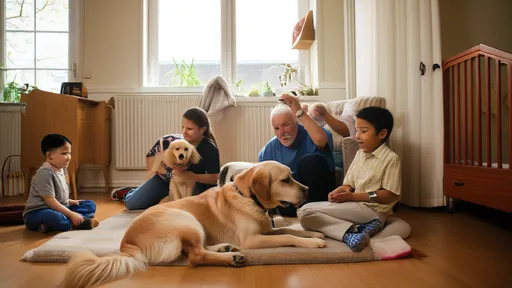
Dogs, as a species, have evolved alongside humans for thousands of years. This long history of cohabitation has fine-tuned their ability to read human social and emotional cues. Studies have shown that dogs can distinguish between happy and angry human faces, respond differently to various tones of voice, and even detect subtle changes in body language and scent that correlate with emotional states. In one notable experiment, dogs were presented with images of human faces displaying different emotions. The animals consistently spent more time looking at the faces that expressed happiness, suggesting not only recognition but also a preference for positive emotional cues.
But it doesn’t stop at visual signals. Dogs are also highly sensitive to auditory cues. The tone and pitch of human speech convey a wealth of emotional information, and research indicates that dogs process these vocal nuances in ways similar to humans. Functional MRI scans of dogs’ brains have revealed that they use analogous regions to process emotional tones in voices, lighting up in response to positive sounds and showing different patterns for negative ones. This neural similarity might explain why your dog perks up at a cheerful tone or hides when you sound angry.
Perhaps most remarkably, dogs appear to be adept at integrating multiple sensory inputs to form a coherent picture of human emotion. They combine what they see, hear, and even smell to gauge how their owners are feeling. Humans emit distinct chemical signals when experiencing different emotions—fear, for example, produces sweat with a specific odor that dogs can detect. There is evidence suggesting that dogs can smell fear, anxiety, or stress, and adjust their behavior accordingly. This multisensory approach allows them to respond in ways that often feel incredibly intuitive and supportive.
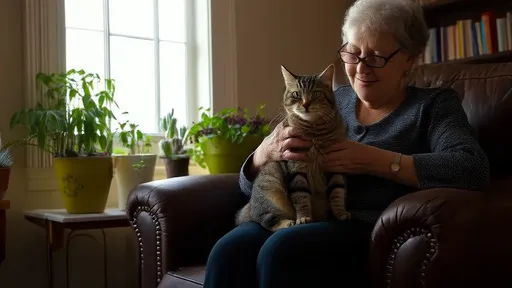
Cats, often stereotyped as aloof and independent, also demonstrate a significant capacity to perceive human emotions. While they may not have the same evolutionary history of cooperation with humans as dogs do, domestic cats have developed their own ways of connecting with their owners. Research has found that cats can recognize their owner’s voice and distinguish it from strangers’, and they are sensitive to emotional tones in human speech. In one study, cats changed their behavior based on whether their owner was smiling or frowning, showing more positive behaviors like purring or rubbing when the owner appeared happy.
Like dogs, cats are observant of human body language and routines. They notice when their owners are stressed or upset, often by picking up on changes in movement, posture, or daily habits. And anyone who has owned a cat knows how they seem to gravitate toward a person who is feeling down, offering quiet companionship that feels anything but random. While scientific studies on cats are fewer than those on dogs, the evidence that exists paints a picture of a animal that is more emotionally attuned than its independent reputation suggests.
Beyond dogs and cats, other pets such as horses, birds, and even rabbits show signs of emotional perception. Horses, for instance, are extremely sensitive to human body language and emotional states, which is why they are often used in therapeutic settings. Birds, particularly parrots, are known for their ability to mimic human speech and respond to emotional cues, sometimes forming deep bonds with their owners. These animals may not have been studied as extensively, but anecdotal evidence and emerging research support the idea that emotional sensitivity is not limited to just a few species.
So how do they do it? The ability of pets to perceive human emotions seems to stem from a combination of evolutionary adaptation, learned behavior, and natural observational skills. Animals that live closely with humans learn to associate specific human behaviors with outcomes that affect them. For example, a dog might learn that a happy owner is more likely to offer playtime or treats, while a stressed owner might be less attentive. This learning process reinforces their attention to emotional cues.
But there’s likely more to it than simple conditioning. Some researchers believe that domestication has selected for animals that are inherently more adept at reading human social signals. In wolves, the ancestors of dogs, similar abilities are less pronounced, suggesting that years of coexistence have honed these skills in domestic dogs. Cats, while not domesticated in the same way, have still undergone changes that make them more suited to living with humans, including possibly enhanced social cognition.
Moreover, the bond between humans and their pets often involves mutual affection and attachment, which can facilitate emotional exchange. Oxytocin, sometimes called the "love hormone," plays a role in human-animal interactions just as it does in human relationships. Studies have shown that when owners and their dogs interact positively—through petting, playing, or simply gazing into each other’s eyes—oxytocin levels rise in both species. This biochemical response may strengthen the emotional connection and enhance the animal’s ability to sense and respond to the owner’s feelings.
The implications of this emotional sensitivity are profound, especially in contexts like animal-assisted therapy. Dogs and other animals are increasingly used to help people with anxiety, depression, PTSD, and other emotional challenges. Their ability to perceive and react to human emotions makes them effective companions in healing processes. For the average pet owner, this knowledge deepens the appreciation of the relationship they share with their animal—it’s not just about care and companionship, but about a genuine, two-way emotional understanding.
Yet, it’s important to remember that pets are not mind readers. Their perceptions are based on observable cues, and they can sometimes misinterpret situations. An owner’s stress might be mistaken for anger, leading a pet to act cautiously or avoidantly. Understanding this can help owners communicate more clearly with their animals, using consistent tones and behaviors to reinforce positive interactions.
In everyday life, this emotional attunement manifests in countless small ways. The dog that brings a toy to a crying owner, the cat that snuggles close during a stressful work period, the parrot that chatteres cheerfully when its owner is happy—these are not mere coincidences. They are evidence of a sophisticated, albeit non-verbal, form of empathy and connection. As research continues to uncover the depths of this ability, it becomes clear that the bond between humans and their pets is built on a foundation of mutual emotional awareness that is both ancient and continually evolving.
So the next time your pet seems to sense your mood before you’ve even said a word, remember that it’s not just your imagination. They are paying attention in ways we are only beginning to fully understand, reminding us that communication transcends language and that sometimes, the most profound connections are felt rather than spoken.
By /Sep 10, 2025

By /Sep 10, 2025

By /Sep 10, 2025

By /Sep 10, 2025

By /Sep 10, 2025

By /Sep 10, 2025

By /Sep 10, 2025

By /Sep 10, 2025

By /Sep 10, 2025
By /Sep 10, 2025

By /Sep 10, 2025

By /Sep 10, 2025

By /Sep 10, 2025

By /Sep 10, 2025

By /Sep 10, 2025

By /Sep 10, 2025
By /Sep 10, 2025

By /Sep 10, 2025

By /Sep 10, 2025

By /Sep 10, 2025
