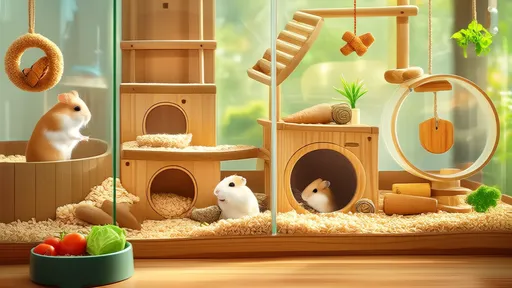
Creating an enriching habitat for your hamster goes far beyond simply providing a cage with basic necessities. A well-designed environment, often referred to as an enrichment playground, is fundamental to your pet's physical health and mental well-being. Hamsters are intelligent, curious, and active creatures by nature. In the wild, they would spend their nights foraging for food, exploring vast territories, digging complex burrows, and encountering various stimuli. A standard, sparse cage can lead to boredom, stress, and the development of stereotypic behaviors like bar chewing or incessant climbing. The goal of enrichment is to mimic these natural behaviors as closely as possible within a domestic setting, offering your tiny companion a stimulating, engaging, and ultimately happier life.
The foundation of any great hamster playground is, without a doubt, space. The absolute minimum floor space recommended by ethical animal welfare groups is 450 square inches, but more is always better. Think long and wide, not tall. While hamsters do enjoy climbing, their primary mode of exploration is horizontal. A large tank, a well-ventilated terrarium, or a large bin cage are excellent choices as they provide unbroken floor space and allow for deep bedding. The enclosure should have a solid base, not wire, to protect their delicate feet. Ample space is the blank canvas upon which you will build your masterpiece of enrichment.
Perhaps the single most important element for a hamster's enrichment is deep bedding. In the wild, a hamster's life revolves around its burrow. It provides safety, a place to sleep, store food, and raise young. Denying them the ability to dig and burrow is to deny a core part of their instinct. Aim for a minimum depth of 6-8 inches, but 10-12 inches or even deeper is ideal for larger Syrian hamsters. Use a safe, absorbent, and dust-free bedding material such as aspen shavings, paper-based bedding, or a mix that includes orchard grass or hemp. This deep substrate allows your hamster to construct a complex network of tunnels and chambers, providing hours of natural digging work and a profound sense of security.
Within this spacious, deep-bedded enclosure, the next critical component is a variety of hides and shelters. Hamsters are prey animals and feel most secure when they have multiple options to retreat to and feel hidden. Offer a selection of hides in different sizes, shapes, and materials. Ceramic hides, like small plant pots or specially made hamster hides, stay cool. Wooden hides, such as multi-chambered hides or simple wooden houses, can also be chewed, serving a dual purpose. Coconut hides, tunnel systems, and even cardboard boxes (with any tape or labels removed) are excellent, inexpensive options. Scatter these throughout the cage, especially on the surface and partially buried within the bedding to encourage exploration.
For physical exercise and muscle tone, a suitable wheel is non-negotiable. The wheel must be solid-surfaced (no rungs or wire, which can cause serious injury) and large enough that your hamster's back does not curve at all while running. For most Syrian hamsters, this means a wheel with a diameter of 10-12 inches. For smaller dwarf species, 8 inches is usually sufficient. A properly sized wheel is silent and allows for a natural, flat-backed running gait. Place it on a stable platform or directly on the base of the cage to prevent it from sinking into the bedding and becoming obstructed.
Beyond the wheel, consider adding other structures for climbing and exploring. Mental stimulation is just as crucial as physical exercise. Foraging is a primary natural behavior that you can easily encourage. Instead of placing all food in a bowl, scatter a portion of their daily seed mix throughout the bedding. This forces them to use their powerful sense of smell and natural foraging instincts to find their food, turning mealtime into an engaging activity.
You can also hide treats inside puzzle toys, toilet paper tubes pinched shut at both ends, or within specially designed foraging toys. This work keeps their mind sharp and prevents boredom. Chewing opportunities are another vital form of mental and dental enrichment. A hamster's teeth never stop growing, and they must constantly gnaw to keep them worn down to a healthy length. Provide a variety of safe chewing materials. Applewood, pearwood, and willow sticks are excellent choices. You can also offer Whimzees dental chews (the XS size), seagrass, and loofah chews. Rotate these items to maintain your hamster's interest and ensure they always have something appropriate to gnaw on, which will also help protect the wooden items in their cage from being destroyed. Don't forget the power of novelty and rotation.
Even the most amazing playground can become predictable over time. Every week or two during a spot-clean, subtly change the layout of the cage. Move a hide to a different corner, add a new tunnel, or bury a new chew toy in the bedding. This simple act makes the environment new and exciting again, encouraging re-exploration. You don't need to completely redesign it every time, as this can be stressful, but small changes can have a big impact on sustained mental engagement. Finally, consider creating a dedicated sand bath area. For many species, particularly dwarves, sand is not just for cleaning; it's a form of environmental enrichment. Use a small, heavy ceramic dish filled with chinchilla bath sand (not dust, which is too fine and can cause respiratory issues). Your hamster will roll in it to keep their coat clean and oily, but they may also dig in it, forage in it if you hide treats, and simply enjoy the different texture.
It's a simple addition that provides a unique substrate and promotes natural grooming behaviors. Observing your hamster is the ultimate guide to success. Watch how they interact with each element you introduce. Do they enthusiastically burrow in the deep bedding? Do they use all the hides, or do they favor one? Are they running comfortably on the wheel? Their behavior will tell you what they enjoy and what might be missing. Building a hamster enrichment playground is a dynamic process of providing options and observing preferences. The reward is a active, curious, and content pet, exhibiting a wide range of natural behaviors, and the knowledge that you are providing them with a truly wonderful quality of life.

By /Sep 10, 2025

By /Sep 10, 2025

By /Sep 10, 2025

By /Sep 10, 2025

By /Sep 10, 2025

By /Sep 10, 2025

By /Sep 10, 2025

By /Sep 10, 2025

By /Sep 10, 2025

By /Sep 10, 2025

By /Sep 10, 2025

By /Sep 10, 2025

By /Sep 10, 2025

By /Sep 10, 2025
By /Sep 10, 2025
By /Sep 10, 2025
By /Sep 10, 2025

By /Sep 10, 2025
By /Sep 10, 2025

By /Sep 10, 2025
