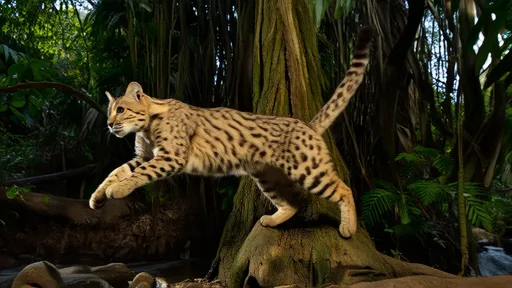
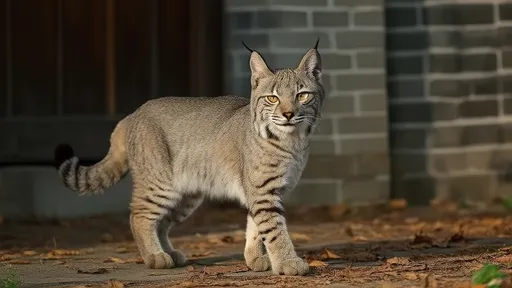
The Bengal cat, with its striking leopard-like coat and athletic physique, stands as a testament to its wild ancestry. A hybrid born from the crossing of a domestic feline and the small, wild Asian leopard cat, this breed carries within its DNA a profound and irrepressible call of the wild. This heritage is not merely cosmetic; it is the very core of its being, manifesting in a breathtaking blend of intelligence, agility, and an insatiable curiosity. To welcome a Bengal into one's home is to enter into a pact with a sliver of the untamed, a commitment to understand and cater to a spirit that is fundamentally more primal than that of the average house cat. It is a journey that demands more than passive companionship; it requires an active and dedicated partnership.
At the heart of this commitment lies the undeniable and high need for physical activity. A Bengal cat is not a creature of languid afternoons spent entirely in sunbeams, though it may indulge in them briefly. It is a powerhouse of energy, a born athlete whose body is built for running, jumping, and climbing. This is not a trait that can be trained or wished away; it is an intrinsic part of their nature. An under-stimulated Bengal is a recipe for discontent, a situation that often leads to the development of problematic behaviors. Without a proper outlet for their boundless energy, these brilliant animals will inevitably create their own, which typically involves scaling your curtains, redesigning your bookshelves by knocking everything off, or mastering the art of opening cabinets to explore the contents within. This is not malice; it is sheer boredom channeled through a highly capable and inventive mind.
Therefore, the cornerstone of a harmonious life with a Bengal is the provision of ample and robust exercise opportunities. This goes far beyond a simple feather wand waved for a few minutes each evening. Bengal cats thrive on interactive play that engages their powerful prey drive. Sessions that mimic the stalk, chase, and pounce sequence of a hunt are profoundly satisfying for them. Da Bird-type toys that flutter and swoop, laser pointers (with the critical caveat of always ending the session by landing the red dot on a physical toy they can "catch" to prevent frustration), and long wands with enticing attachments can provide fantastic cardiovascular workouts. These play sessions should be vigorous, daily, and considered non-negotiable, much like walking a high-energy dog.
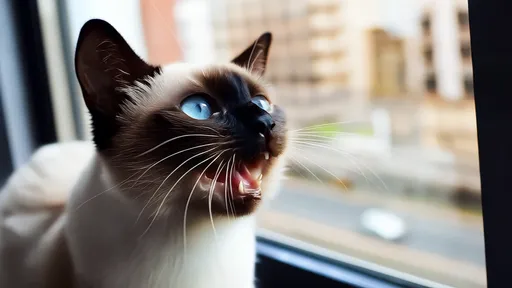
Beyond structured play, their environment must itself encourage movement. A home with vertical space is not a luxury for a Bengal; it is a necessity. Cat trees are a start, but the most fulfilled Bengals live in homes that embrace the concept of a cat superhighway—a network of wall-mounted shelves, walkways, and perches that allows them to travel around a room, or even an entire house, without ever touching the floor. This satisfies their innate desire to survey their domain from on high, provides exercise as they leap from platform to platform, and offers them safe retreats. A tall, sturdy cat tree positioned near a window becomes a theater for bird-watching, a activity that provides crucial mental stimulation.
This leads to the equally critical concept of environmental enrichment. For a mind as sharp and active as a Bengal's, physical exertion alone is not enough. Their intelligence demands constant engagement to prevent boredom, which is the root of most behavioral issues. Enrichment is the art of making their environment dynamic, challenging, and ever-interesting. It is about providing puzzles for their body and their brain. Food puzzles are a brilliant tool in this arsenal. Instead of simply eating from a bowl, a Bengal can work for its meals by rolling a puzzle ball that dispenses kibble or figuring out how to extract treats from a more complex interactive feeder. This transforms mealtime from a passive event into an active, rewarding job that stimulates their problem-solving skills.
Novelty is another powerful form of enrichment. Bengals are inveterate explorers. Regularly rotating their toys, so that old ones disappear for a few weeks and return feeling new, helps maintain interest. Introducing simple, safe new objects for them to investigate—a cardboard box with holes cut in it, a paper bag (with handles removed for safety), a new textured mat, or even a shallow pan of water to paw at (many Bengals have a peculiar fascination with water)—can provide hours of investigative entertainment. These activities tap into their curious nature and prevent the environment from becoming stale and predictable.
The combination of intense physical activity and a deeply enriched environment does more than just prevent mischief; it allows the true, magnificent nature of the Bengal to shine. A tired and mentally satisfied Bengal is a wonderful companion—affectionate, engaging, and deeply bonded to the human who has taken the time to understand its needs. The wild beauty of a Bengal cat is not just in its spotted coat or its sleek form; it is in the vibrant, untamed spirit that animates it. Honoring that spirit through dedicated exercise and thoughtful enrichment is the key to unlocking a truly extraordinary relationship with one of the most captivating creatures in the domestic world. It is a commitment to cohabiting with a small piece of the wild, and the rewards for such an effort are immeasurable.
By /Aug 20, 2025
By /Aug 20, 2025
By /Aug 20, 2025

By /Aug 20, 2025

By /Aug 20, 2025
By /Aug 20, 2025
By /Aug 20, 2025
By /Aug 20, 2025
By /Aug 20, 2025
By /Aug 20, 2025

By /Aug 20, 2025

By /Aug 20, 2025

By /Aug 20, 2025

By /Aug 20, 2025

By /Aug 20, 2025

By /Aug 20, 2025

By /Aug 20, 2025

By /Aug 20, 2025

By /Aug 20, 2025

By /Aug 20, 2025
